Data Fabric Solutions
Help your teams make faster decisions with trusted data from across your organization. Build your data fabric architecture with the Precisely Data Integrity Suite to simplify governed, self-service access.
Start Building Your Data Fabric Today
Disconnected systems make it harder for teams to find and use the data they need. Start connecting your data today with the Precisely Data Integrity Suite. Our data fabric solutions combine automated data integration with metadata management and governance to help teams find and access trusted data across your organization.
Centralize Data Governance
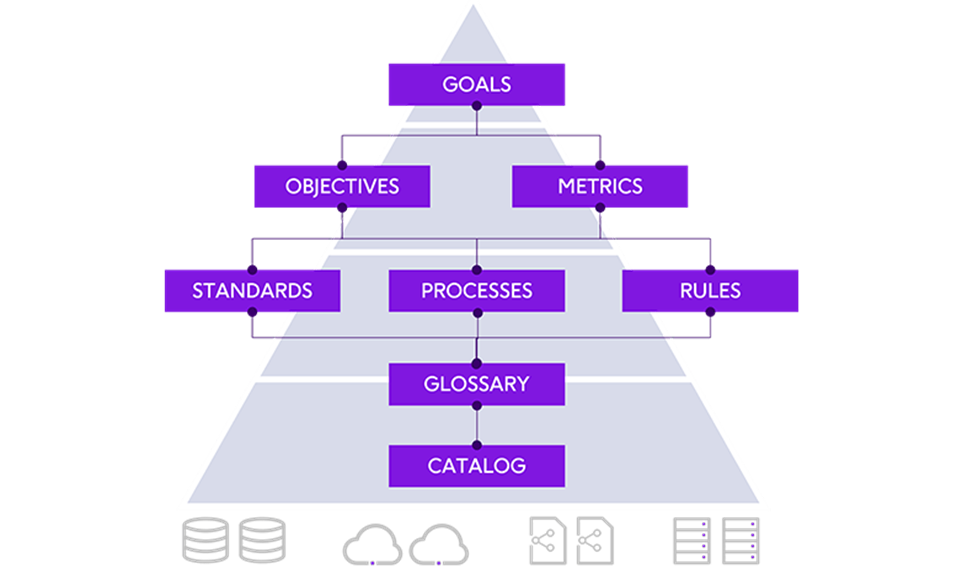
Use data responsibly with clear ownership and consistent policies across your data fabric. The Precisely Data Integrity Suite Data Governance service provides a configurable framework that links data assets to business definitions and policies. Improve data literacy and make accountability visible, so teams understand the data they’re using and the policies that apply.
Automate Metadata Management
Keep metadata current as data moves and changes across your organization. Metadata management helps teams understand how data is structured, where it comes from, and which policies govern its use, so they can integrate and use it correctly.
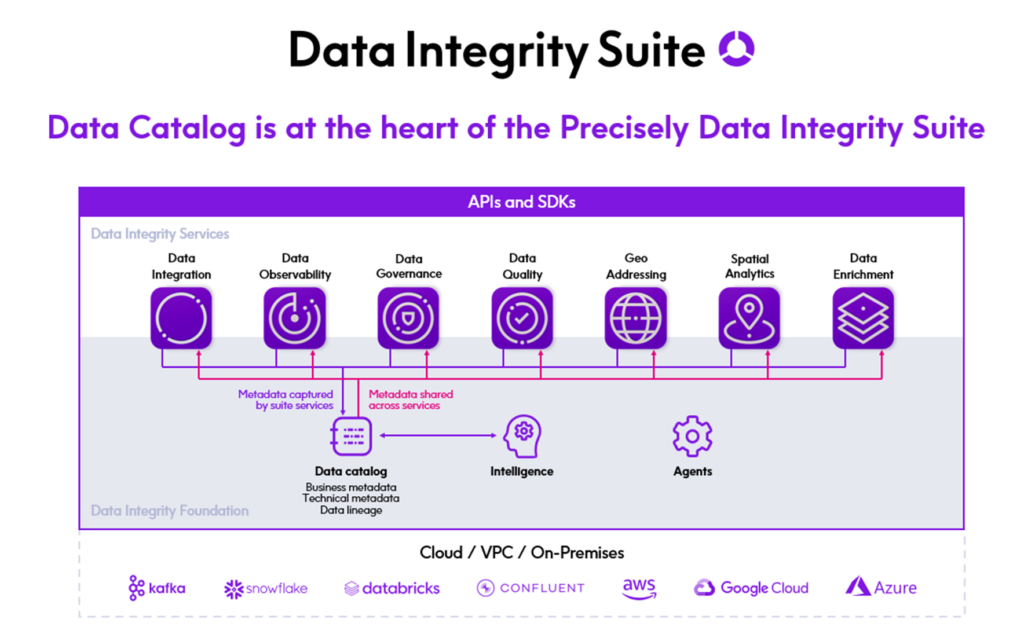
The Precisely Data Integrity Suite automatically captures, organizes, and updates metadata from integrated sources through its foundational Data Catalog. Rule-based routines and machine learning activate metadata to support data management. The Data Observability service profiles and monitors data, alerting owners and stakeholders to anomalies or changes in data and metadata that could affect their data products.
Enable Self-Service Data Access
Give teams self-service data access to discover relevant data products and understand whether they meet their needs.
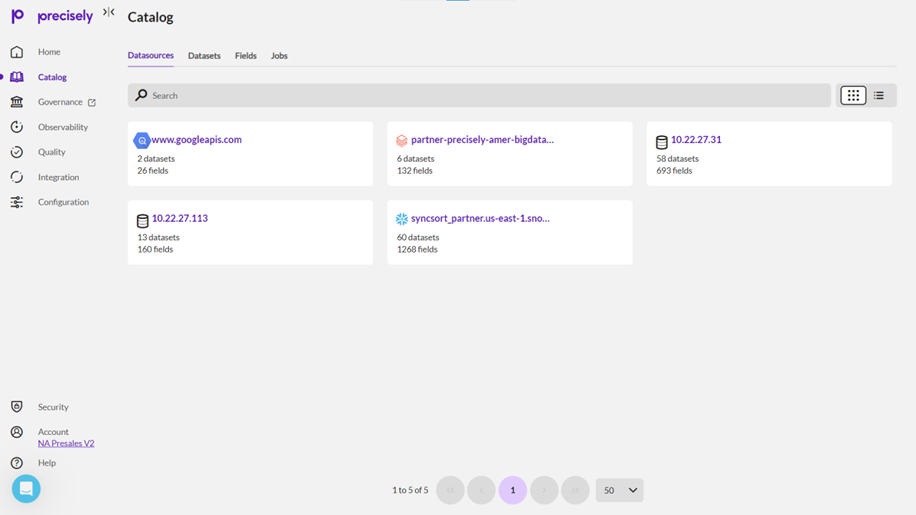
The Precisely Data Integrity Suite combines natural-language search with Data Catalog card views, giving users the metadata to identify available data and assess its suitability. Integration with the Data Governance service supports access requests and collaboration, helping teams understand data ownership and the policies governing its use.
Connect Business Data with Automated Data Integration
Build a modern data fabric with automated access to business data across your organization. Create reusable streaming pipelines to keep destination data updated as your source records change.
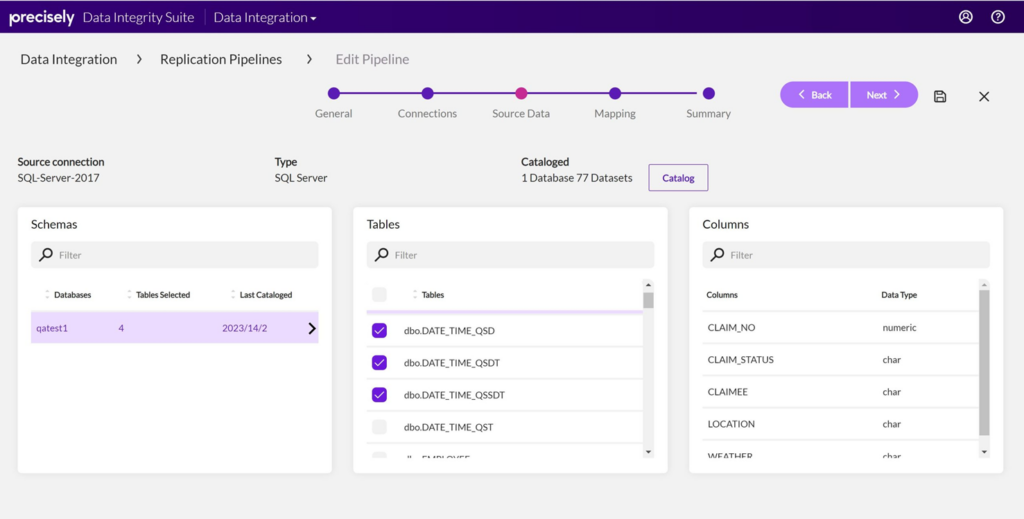
The Precisely Data Integrity Suite connects data from databases and applications, including mainframes and IBM i systems. The Data Integration service delivers the data into a logical data warehouse, data lake, or wherever your data fabric lives.
Data Integrity Suite
The Precisely Data Integrity Suite can help you prepare your data ecosystem for this new approach by supporting requirements such as automating integration, managing your metadata, and centralizing your data governance. Start your journey to a more modern data fabric approach today.
The Evolution of Data Governance
At Gartner UK in May 2024, Tendü Yoğurtçu, PhD, CTO at Precisely and Nicola Askham, The Data Governance Coach discuss the evolution of data governance to drive innovation and not just tick boxes for compliance. Topics where data governance is taking center stage include empowering data & analytics teams to be more proactive, ensuring data integrity for data leveraged for AI and GenAI, and preparing for modern data management strategies like data fabric and data mesh.
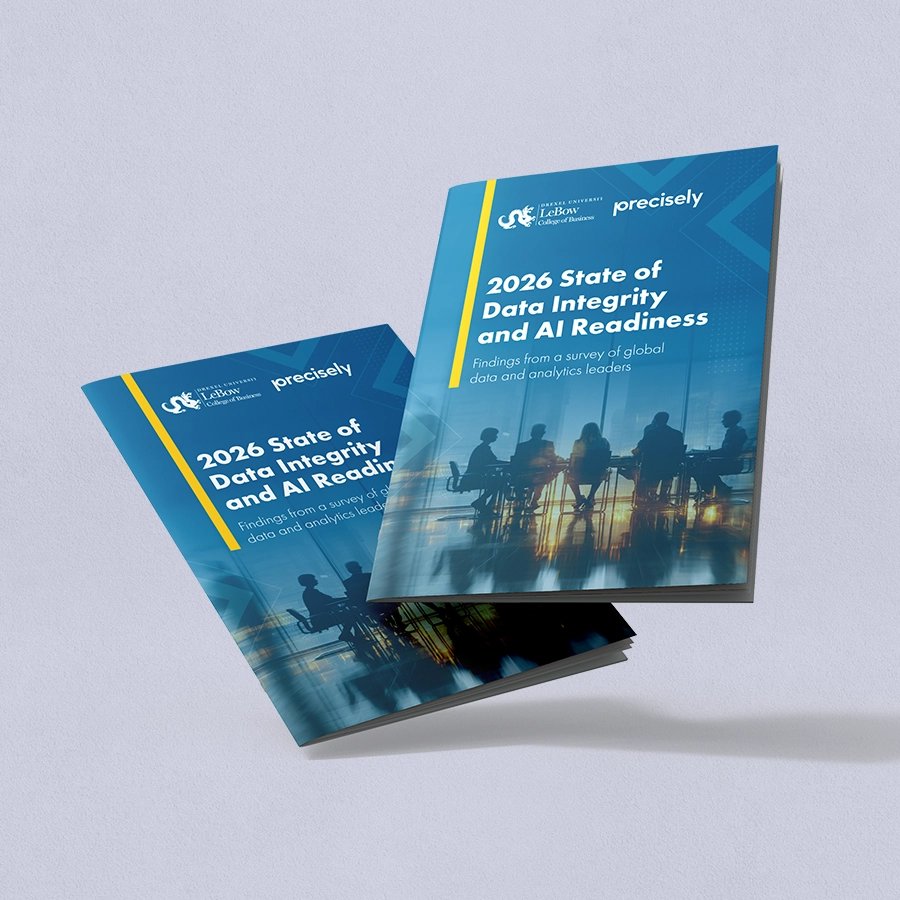
cite data quality as the most common data integrity priority.
-2026 State of Data Integrity and AI Readiness Report
Plan Your Data Fabric Implementation
Articulate your data fabric strategy and build the business case with Precisely Data Strategy Consulting. Our consultants bring deep domain and industry expertise to help you connect your plans to business priorities and establish metrics to track progress, so you can demonstrate the value of your investment.
Data Fabric Solutions FAQ
What is a data fabric solution?
Data fabric solutions combine data management capabilities to make distributed data easier to find and use. They connect data integration and metadata management with governance and self-service access.
What are the benefits of a data fabric?
A data fabric helps teams find and use trusted data across disconnected systems. Automated data integration reduces manual data preparation, while shared metadata gives users the context to understand available data. Governed self-service data access reduces reliance on IT for routine data requests and supports faster business decisions.

How is data fabric different from data mesh?
Data fabric focuses on connecting data and automating its management through metadata. Data mesh focuses on how organizations assign ownership, with business domains responsible for their data products. The approaches work together: a data fabric can provide the integration and governance capabilities that support a data mesh.
How does a data fabric differ from a data lake?
A data lake stores large volumes of data for processing and analysis. A data fabric coordinates discovery and governance across distributed systems, including lakes and warehouses. A lake can therefore be part of a data fabric.
How do metadata management and governance support a data fabric?
A data catalog organizes metadata so users can find available data and trace its origins. Metadata management keeps the information current. Data governance defines ownership and usage policies while clarifying business meaning. Data observability detects changes and anomalies that could affect data reliability.